A piece of malware designed to launch brute-force password guessing attacks against websites built with popular content management systems like WordPress and Joomla has started being used to also attack email and FTP servers.
The malware is known as Fort Disco and was documented in August by researchers from DDoS mitigation vendor Arbor Networks who estimated that it had infected over 25,000 Windows computers and had been used to guess administrator account passwords on over 6,000 WordPress, Joomla and Datalife Engine websites.
Once it infects a computer, the malware periodically connects to a command and control (C&C) server to retrieve instructions, which usually include a list of thousands of websites to target and a password that should be tried to access their administrator accounts.
The Fort Disco malware seems to be evolving, according to a Swiss security researcher who maintains the Abuse.ch botnet tracking service. “Going down the rabbit hole, I found a sample of this particular malware that was brute-forcing POP3 instead of WordPress credentials,” he said Monday in a blog post.
To read this article in full or to leave a comment, please click here
YAHOO XILINX WESTERN DIGITAL VOLT INFORMATION SCIENCES VISHAY INTERTECHNOLOGY VIRGIN MEDIA VIEWSONIC


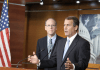 The intersection of fiscal politics, national crisis, and technology regulation is a silly place, as there should be no overlapping space between the three issues. And yet. Good news: We’re not ending net neutrality. The bad news, depending on your politics, is that we’re likely going to shut down the United States government. That said, the current Washington dynamic has offered up a new fact: Technology policy and regulation is game for political football. That’s a damn shame. Long gone now, it seems, are the days in which technology managed to steer mostly clear of politics. Perhaps there never was such a time, and we have merely invented it. But whether it did or did not exist before, it is certainly gone now. Let’s review. A House bill that would fund the government, but remove funding for the Affordable Care Act (ObamaCare), was slapped down in the Senate. The House began to compile a bill to replace its first effort that contained a grab-bag of conservative wishes. One of those wishes was the ‘blocking’ of net neutrality. So, tech policy was lashed aside fiscal policy as a gimme to House members who think that the regulation is somehow anti-Internet, and likely accept large donations from telco firms that are opposed to it. Happily, that idea is dead. Instead, according to Politico and nearly every other political outlet, House Republicans will strap a one year delay of ObamaCare to their bill to fund the government. Senate Democrats and the President have flatly stated that any such bill is dead on arrival. So, net neutrality managed to dodge whatever might have come its way, but the government itself is still hosed. I don’t see a way that we avoid shutdown. But Verizon won’t be able to charge Netflix exorbitant fees to send its content to its subscribers. That’s good. And other ISPs won’t be able to slow the content of rival companies, which is also a pretty decent outcome. Anyway, that’s where we are at. It’ll be an interesting week. Top Image Credit: House GOP Leader


 It's the first app I launch in the morning, and the first I install on a new phone, and my most-visited web site. Which is strange, because I don't much like most social media. I'm on Facebook only reluctantly; 90% of my posts there are automatic reposts from my tweet stream. I want to like Google+, but I keep failing. Twitter, though, is the hub of
  The Gillmor Gang — Robert Scoble, Keith Teare, John Taschek, Kevin Marks, and Steve Gillmor — new iPhone + new OS = continued Apple domination. Twitter vacillates between NYSE and NASDAQ. Age of Context The Book ships as publishing gestation shrinks from 9 months to 2 weeks. It is only toward the end of the show that someone in the chat notices @scobleizer isn't wearing Google Glass. Apple keeps on piling up yardage, reminding us not only of Steve Jobs' prophetic vision of the future, but his persistent hammerlock on our wallets.